




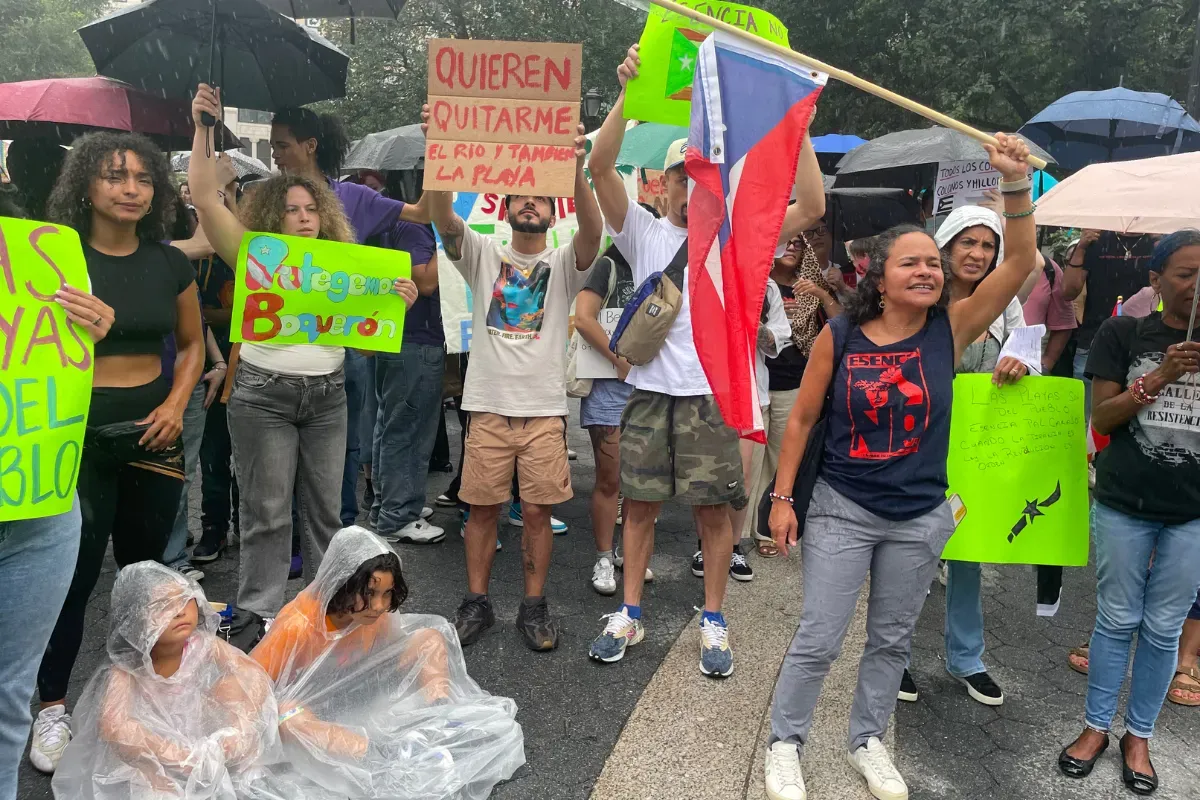
Much of this year, Puerto Rico has been in a severe water crisis, now considered a "drought disaster." At the same time, the archipelago has faced an economic crisis compounded by a U.S. financial board that slashed social and infrastructure spending while protecting the interests of corporate bondholders. Meanwhile luxury developers—one hailing from New York—have decided it's the right time to push forward on building a new private city for wealthy investors, one that builds over acres of protected land.
To City Councilmember Alexa Avilés—whose family comes from Puerto Rico's Vega Baja, on the northern part of the island—the suffering of her people is also a New York story. She says much of the exploitation of the island can be traced directly back to the Big Apple. That's why, on Monday, she and her colleagues in the Committee on Cultural Affairs, Libraries and International Relations heard three resolutions she sponsors that seek to protect Puerto Rico, and which will soon go to a City Council vote.
"We are the city that has the largest population of Puerto Ricans outside of the island, but also, more fundamentally, the financial institutions which are behind much of the island's economic challenges are based here in New York City," she told Hell Gate ahead of the vote.
One of the resolutions demands that the state legislature pass a bill that would close a legal loophole that allows New York-based predatory "vulture funds" to buy debt in fiscally unstable places like Puerto Rico, and then sue them in New York courts to recall the debt for a profit. More than half of the world’s sovereign debt bonds are governed by New York laws. "It's a predatory practice that is pretty egregious and disgusting, and certainly has been a giant part of Puerto Rico's economic problem," Avilés said.
However, the state law—sponsored by State Senator Liz Krueger and Assemblymember Jessica González-Rojas—has stalled several times in the legislature due to opposition by special interest groups, she said. This year, it passed again in the New York Senate, but Assembly Speaker Carl Heastie did not bring it to a vote in the Assembly. "[The law] hasn't passed—not because it's not the right thing to do, but because we're up against the financial lobby. And that is very powerful," said Avilés. Heastie did not immediately respond to a request for comment.
Subscribe to read the full story
Become a paid subscriber to Hell Gate to access all of our posts.
Subscribe