




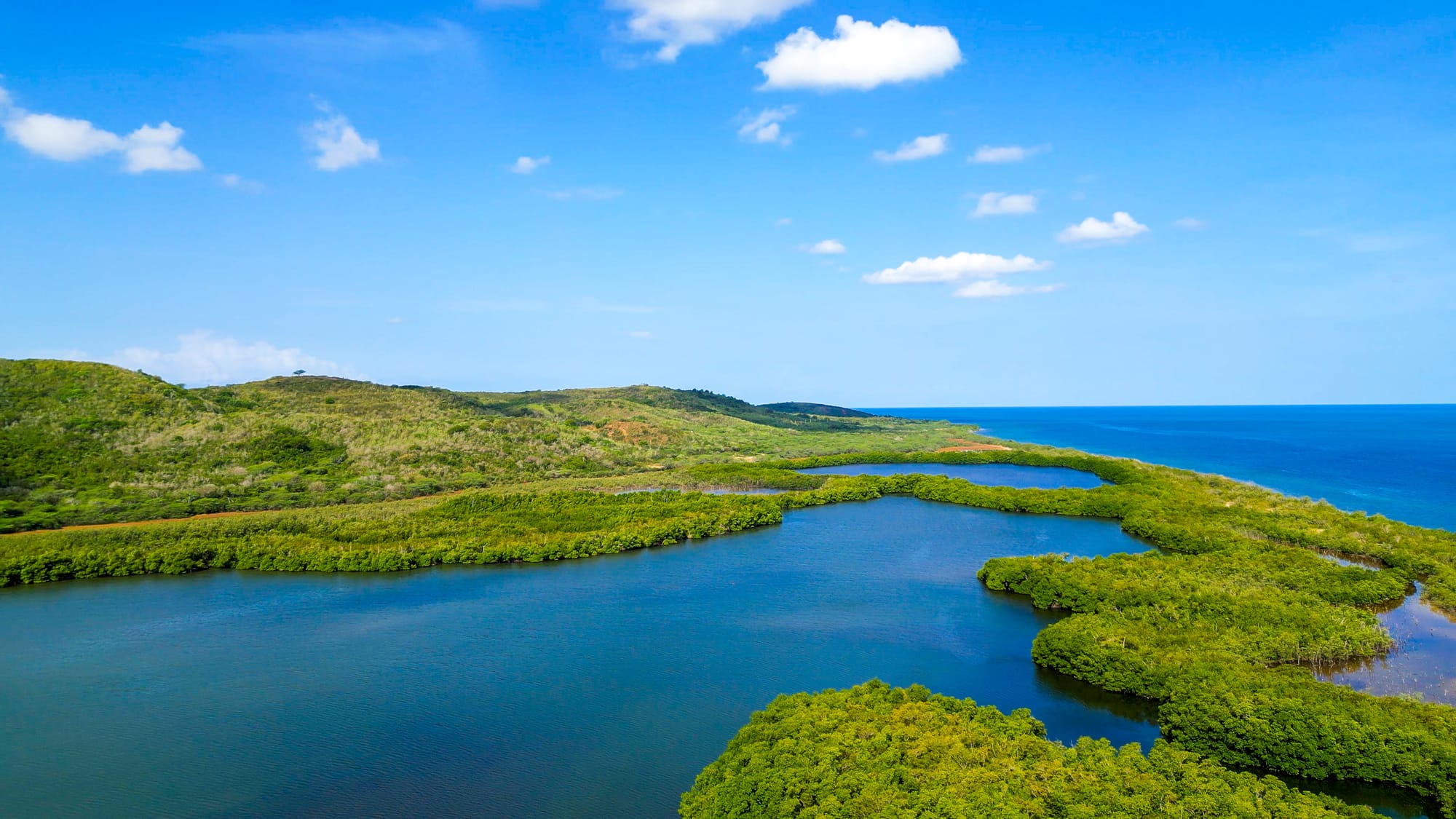
Last week, New York's Puerto Rican diaspora came together to protest a $2.5 billion private luxury "community" planned by London and New York developers on the island’s picturesque southwest coast, as Puerto Ricans continue to suffer an extreme drought, with some going more than 100 days without running water this year.
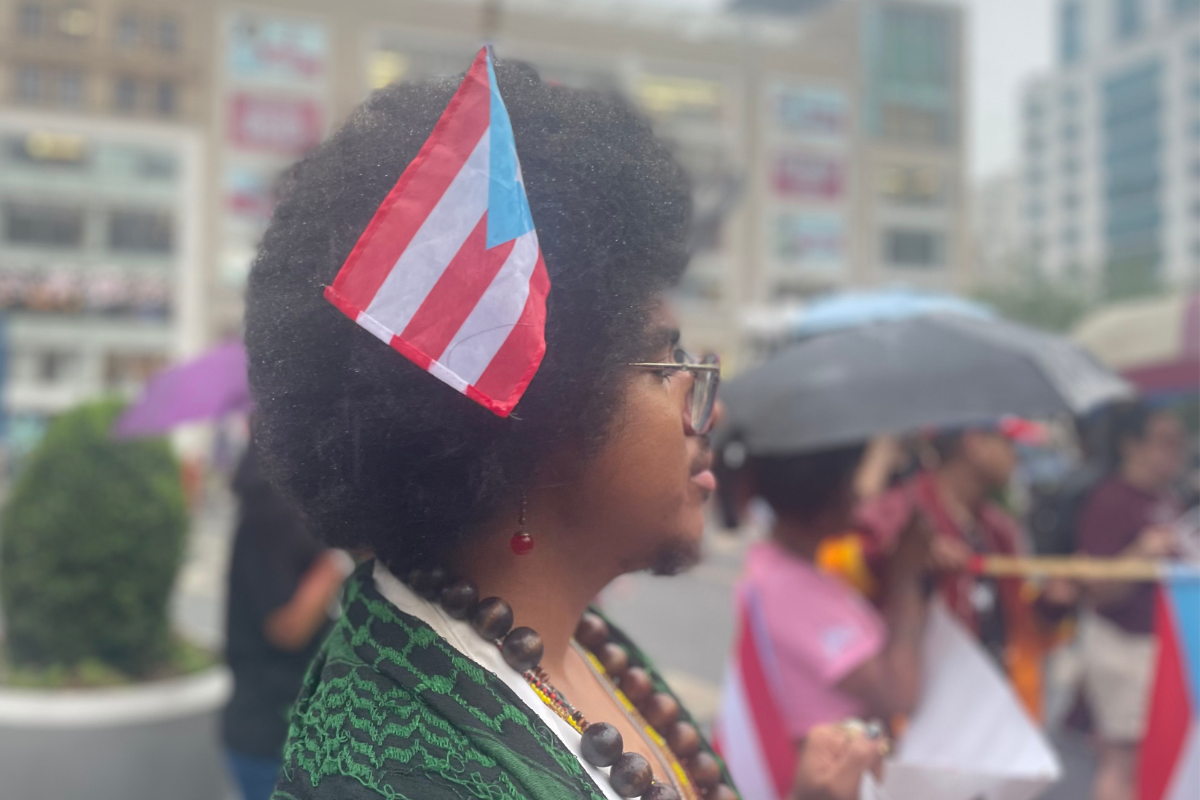
More than 150 New Yorkers gathered under thunderclouds in Union Square last Wednesday to voice their objection to the project, marketed as "Esencia." The developers, Reuben Brothers and Three Rules Capital, plan to build what amounts to a small city on 2,000 acres of coastal land in Cabo Rojo, with 530 hotel rooms, 1,132 private homes, two golf courses, plus a school, hospital, airfield and a "self-sufficient microgrid" for resident families to use. In March, tens of thousands of Puerto Ricans flooded the streets of San Juan in opposition to the development, which they say will hamper community access to the beaches, and further stretch local access to water in order to create a "neo-colonial settlement" for the ultra-rich.
The protest came a week after Puerto Rico's Adjunct Board of the Permit Management Office approved an exemption to a law preventing developers from building on parts of the land that are classified as "specially protected" to preserve the island's fragile ecosystems, including its wetlands and mangroves. An investigation from Centro de Periodismo Investigativo found the project has also secured nearly $498 million in tax credits from Puerto Rico's tourism agency, costing each of Puerto Rico's taxpayers $413.
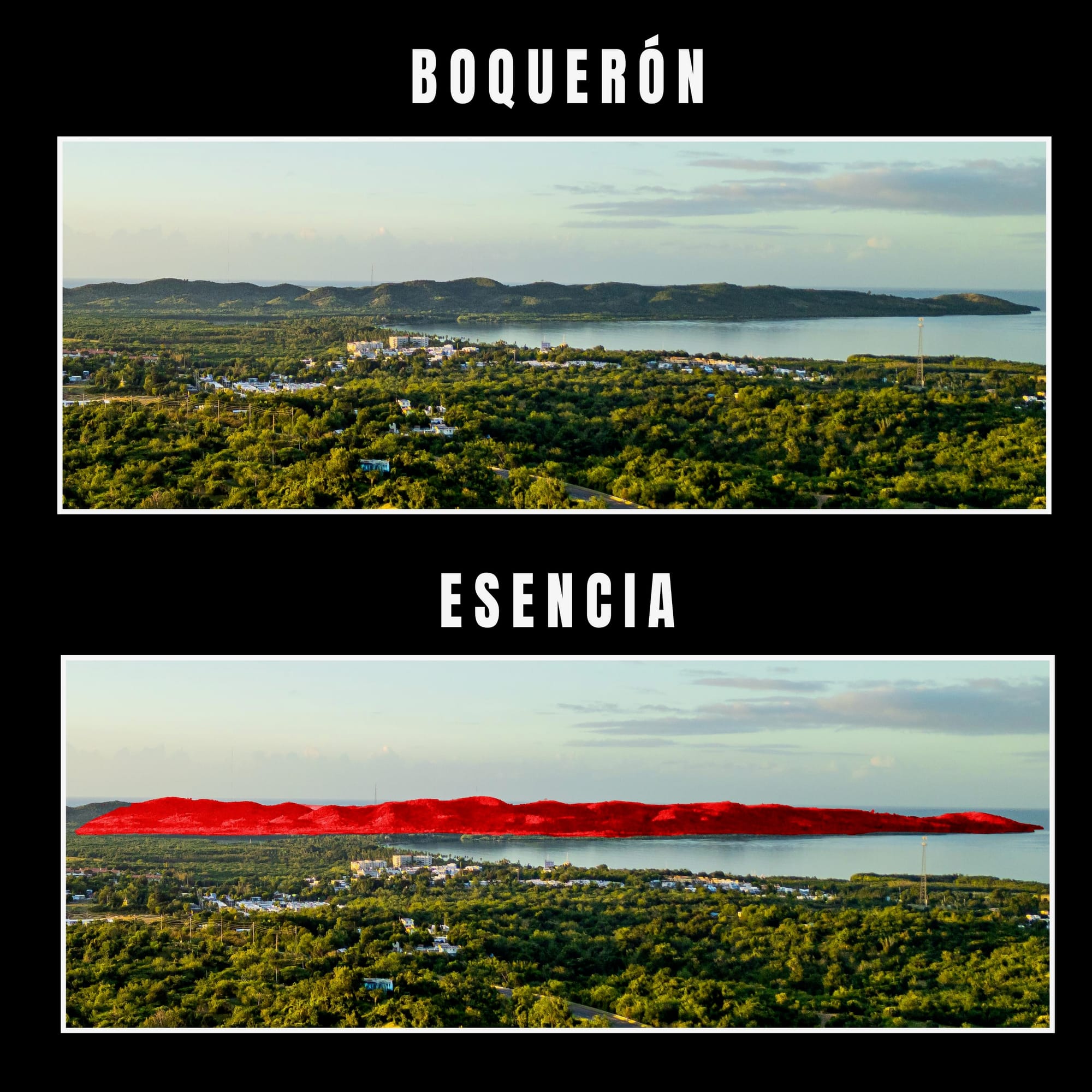
Esencia is now inching toward construction approvals with the support of Puerto Rico Governor Jenniffer González-Colón and other current and former elected officials, several of whom have received the maximum-allowed $3,100 political donations from the developers.
As puddles formed around protesters' feet, Taina Vargas, 47, began to cry under her umbrella. Vargas grew up in Cabo Rojo, and told Hell Gate it was painful to see the project pushed through when locals have so much need. "They're trying to build this thing that's not going to benefit our people, it's going to benefit people from outside," she said, "and they're going to be using up resources, they're gonna destroy the environment, it's just unbelievable."
The developers behind Esencia dispute concerns about the environmental risk and impact to local water supply. The project markets itself as an eco-friendly development run off renewable power, which will not take water from "existing public systems," but rather will collect, store and reuse rain and groundwater on site. Three Rules Capital co-founder Roberto Ruiz Vargas told Hell Gate that Esencia will not draw any water from the aquifer serving locals in Cabo Rojo, but from a section of a different aquifer that is "currently completely unexploited."
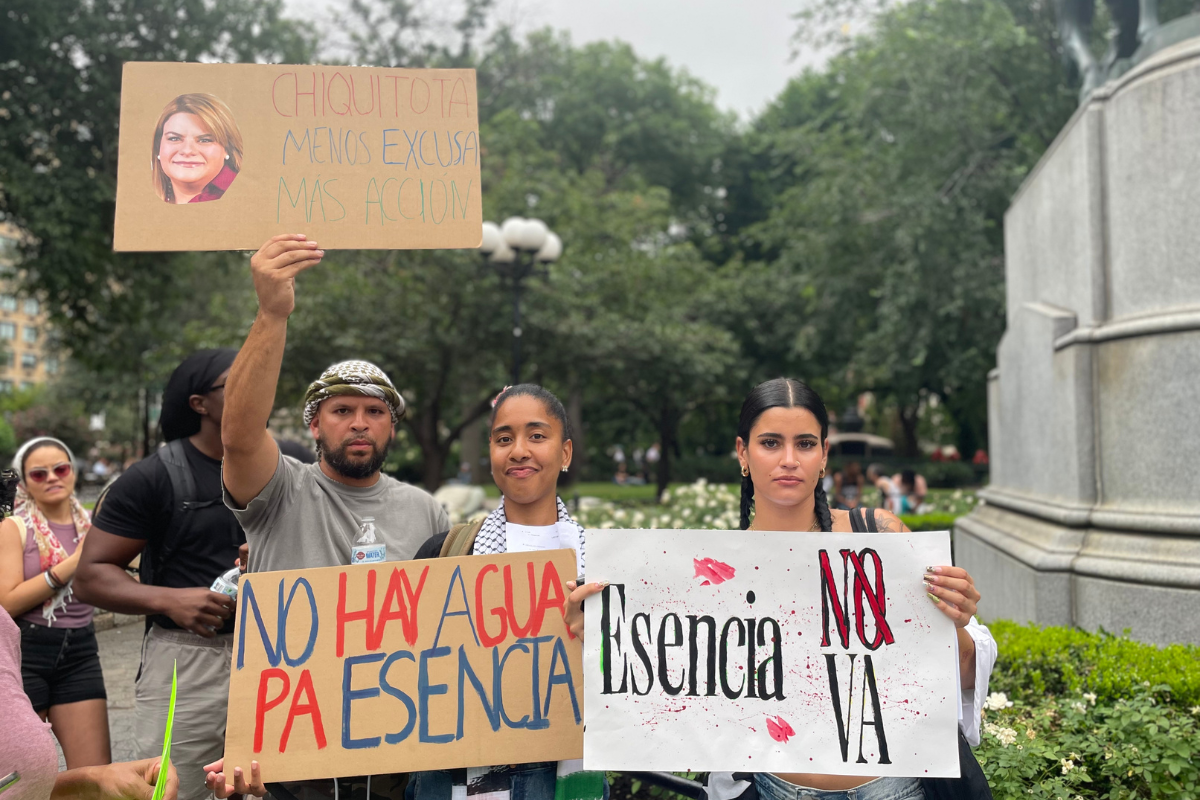
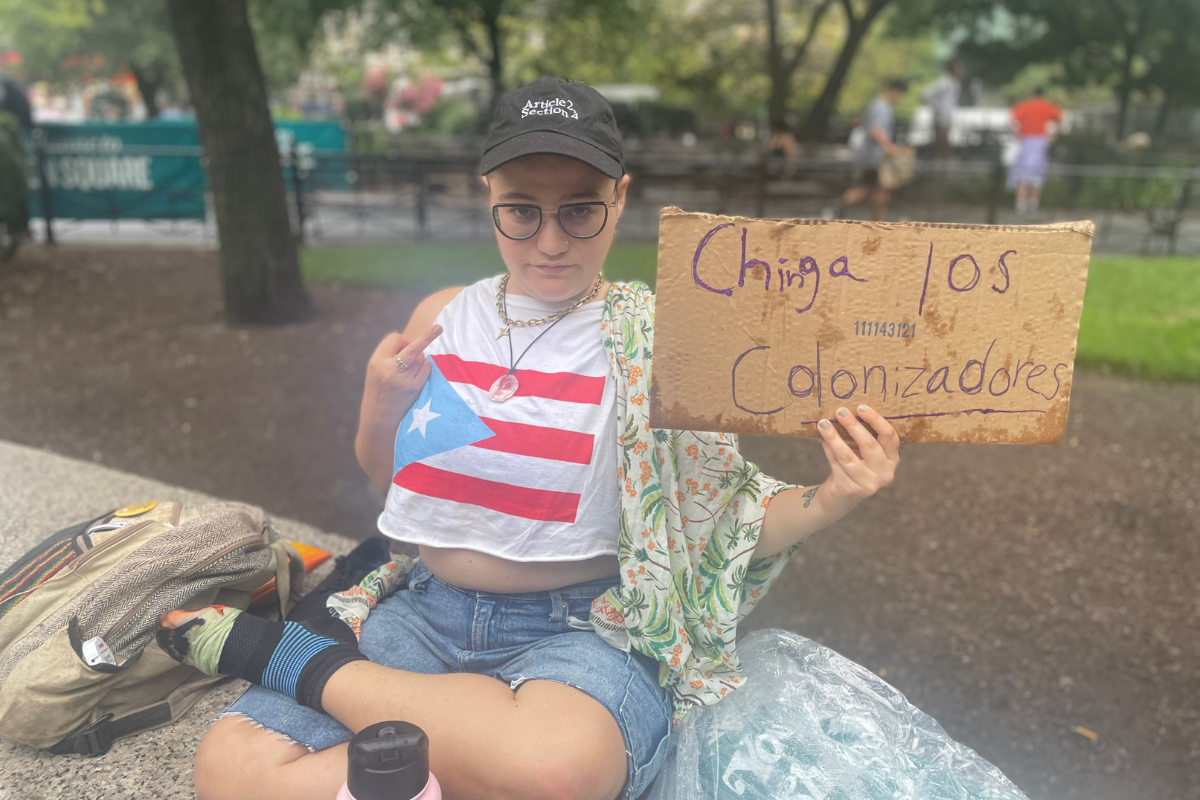
Still, local scientists have contested the developers' assertion, with some calling it a "hydrological fantasy"—and it didn't sit right with Nuyoricans like Mac N., 31, whose father is from Cabo Rojo. "If it's easy to get a water supply there, then why are people not having water?" they asked at last week's protest. "I don't give a fuck what this developer says—if you can make water get there so easy, go give the people water for five years and maybe then you can develop, pendejo!"
Mac told Hell Gate they'd been visiting Cabo Rojo since childhood, and said the development is just the latest front of the United States colonial project. "They've been collecting rainwater to drink there since I was a little baby. This is one of the few untouched parts of the island, and it's Manifest Destiny. In 2026. And it's disgusting."
The owners of Three Rules Capital have a history of building similar luxury developments in other small, coastal communities worldwide. CEO Will Bennett, a New Yorker, touts his background at the luxury real estate company Irongate, leading developments like the Ritz Carlton Residences in Waikiki, Hawaii, and the Four Seasons Resort Los Cabos at Costa Palmas in Baja California Sur, Mexico. However, in Waikiki, local journalists covering the Ritz Carlton development reported that the project was forced through despite local opposition, while developer Irongate—which previously developed Trump International Hotel & Tower Waikiki Beach Walk—made more than $100,000 in campaign donations to the mayor and councilmembers who were in charge of approving the project. President Donald Trump stayed at the hotel on his first trip to Hawaii in 2017.
In Baja California Sur, Irongate's Los Cabos development—strikingly similar to Esencia in its design as a small, exclusive city with luxury hotels, private homes, polo fields and a water-hungry golf course—has been siphoning water from the surrounding community since it opened in 2019, locals say, drawing from the region's shared aquifer, with neighbors reporting sometimes going without water for weeks at a time. (Three Rules Capital's Ruiz Vargas, who was also involved in that development, told Hell Gate the two projects "represent fundamentally different hydrogeological contexts.")
Despite this, Bennett has been painted as a conservationist and renaissance man, of sorts, in mainstream media. A 2025 Real Deal profile presented Bennett as a benevolent developer, praising the fact he'd been able to make it in real estate, despite not having the "roots" of the Lutnick brothers. Bennett, a "farm kid" who grew up in Westchester, was "caring," lacking in the "megalomania" of other developers, and a deep appreciator of nature, according to the trade publication. One outlet praised his art collection, while another celebrates his personal style in an article titled, "From Luxury Developer to Humanitarian, Will Bennett Does It All." Meanwhile, Forbes recently highlighted Esencia's goal to be the first solar-powered luxury development, working on its own grid.
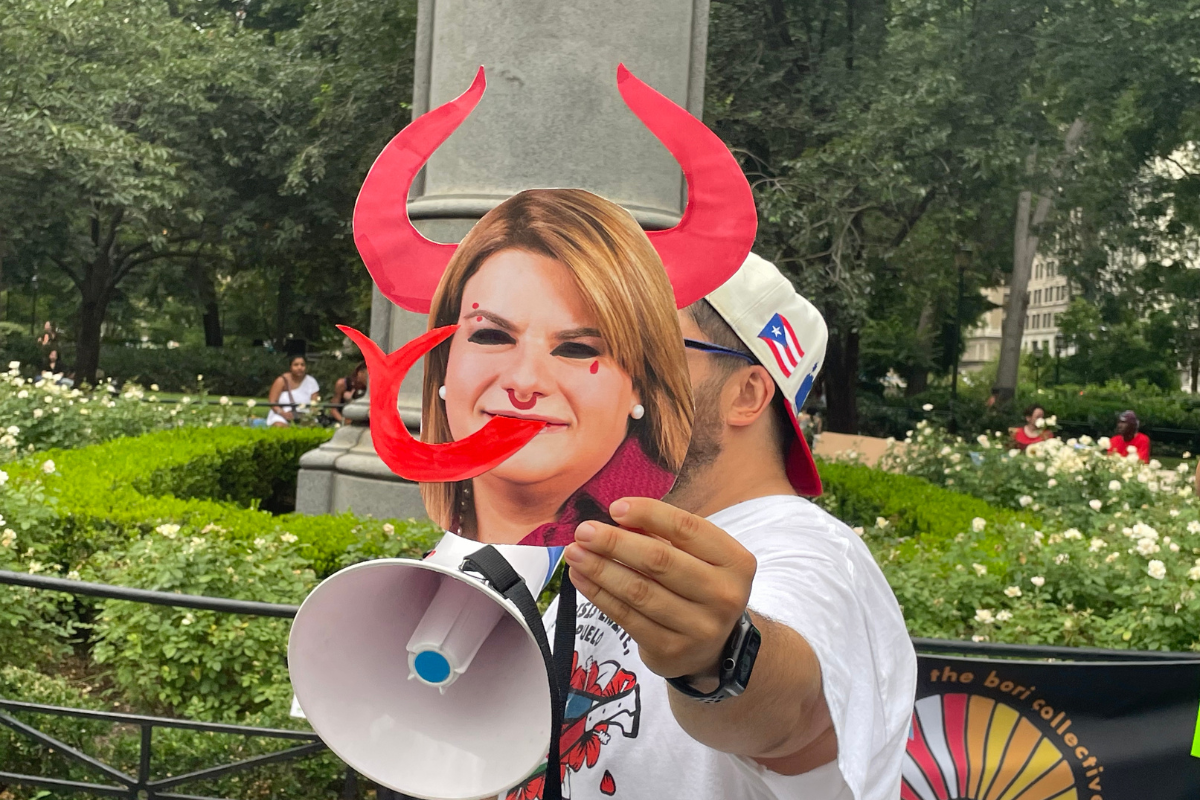
But many Puerto Ricans aren't buying this kind of press, according to Beatriz Llenín Figueroa, an organizer from Cabo Rojo who spoke over the phone with Hell Gate on Monday. "Will Bennett is being actively whitewashed, as this project is actively greenwashed all the time," Llenín Figueroa said.
Llenín Figueroa added that there seems to be a growing awareness of how developers exploit pristine land from Hawaii, to Mexico, to Puerto Rico, and even Albania. Investigative journalists in Puerto Rico recently made the connection that one of the operators slated to run Esencia, Aman Resorts, is the same operator meant to run Jared Kushner's luxury "eco-resort community" built on a protected nature reserve off the west coast of Albania, which Albanians have been similarly protesting in the ongoing Pink Flamingo Revolution.
"People are realizing that it's just this ultra-rich class who are, in a lot of ways, controlling the government and states to basically work for them, or to work as though the government was also a private firm," Llenín Figueroa said. "And they're trying to get to places that are relatively pristine and valuable for them to establish their neo-colonial settlements and their golf playgrounds and their spas."
The Reuben Brothers referred Hell Gate to Three Rules Capital's response to questions. Three Rules Capital's Ruiz Vargas fiercely defended the developer's record.
"Categorizations of a 'playbook' or 'colonization' are completely refuted by the project's actual tract of community and environmental stewardship," Ruiz Vargas said in an email to Hell Gate. "Unlike traditional developments, Esencia has modeled its planning on continuous collaboration and iterative redesign."
Ruiz Vargas said the Esencia project had undergone "one of the most exhaustive public review processes in Puerto Rico's planning history," citing more than 100 "community and stakeholder" meetings. (Llenín Figueroa countered that the developers were conflating "community and stakeholder" to obscure their lack of consultation with residents: "[Our] Coalition has visited virtually all Cabo Rojo communities in door-to-door efforts and no resident to date has confirmed that they were ever contacted or consulted.")
Most of the meetings happened in 2024, and further public hearings were held in March of 2025, Ruiz Vargas said. "Please challenge any of the individuals now arguing we did not hold public hearings if they personally participated in writing and in person during those hearings in March," he said. "They will lead you to believe we needed to hold new public hearings suggesting this is an independent step. Well, it’s not. The law is clear and they were all heard and had their chances to contribute." He said that donations to politicians were made to "[support] leaders who favor sustainable, high-quality economic development for Puerto Rico."
The developers deny that Esencia will function as a private city, stating the project will provide 17,000 jobs for Puerto Ricans—3,000 of them permanent, the rest in the construction phase—and asserting that 70 percent of interest in the units, which range in price from $2 million to over $20 million, has come from people in Puerto Rico.
Ruiz Vargas added that, after public consultation, the developers "slashed" the density of the project from 1,850 to 530 hotel rooms, and from 3,260 to 1,132 homes, and promised to avoid construction impacting the wetlands and mangroves. The beaches, which he said are currently only accessible by boat or four-wheel drive, would be made more widely available for the first time by Esencia developers, he said, including with "ample parking."
"Of course we will have private areas," Ruiz Vargas wrote, "but Esencia will operate as part of the community, not in isolation."
The next step is for the Esencia developers to get the project's building and construction permits approved. They told the Associated Press they were looking to start formally selling units in late 2026, to begin welcoming guests in 2029 (in his 2025 Real Deal story, Bennett said they'd already made some sales).
However, Llenín Figueroa told Hell Gate that opponents in Puerto Rico would be fighting each of those permits—plus the previous land use and environmental approvals—through legal, administrative, and public-pressure means. They were planning another national march, as well as citizen-led public hearings on the land use approval in Cabo Rojo on August 23.
Meanwhile, back in New York, protest organizer Jeremiah Cedeño, founder of New York's Bori Collective, said Puerto Ricans on the archipelago and in the diaspora were currently battling several issues affecting their communities, from ICE in Puerto Rico, to the defunding of the island's public university, to the right to water. Still, he insisted that the fight against Esencia is just as important. "The fear is that this is the catalyst for the beginning of the end, an attack on multiple fronts, a death by one thousand cuts," Cedeño said, adding that it could set a precedent for other developers to build similar projects in Puerto Rico.
But as the rain began to bucket down, protesters said they were undeterred: "The Puerto Rican people, somos fuertes, baby, we are strong, and this is not the first thing we fought, and this is not the last thing we're ever gonna fight," said Mac N. "My family stayed there through all of fucking Maria. If they could stay there with what God throws at them, I don't give a fuck what any men with money can do, OK?"
Subscribe to read the full story
Become a paid subscriber to Hell Gate to access all of our posts.
Subscribe