




In 2016, the government of New Zealand, where I'm from, announced a lofty goal: to make the island nation "predator free" by 2050.
The plan was to eradicate all rats, plus possums, weasels, stoats (and now, feral cats), by mid-century and bring the country back, more or less, to a precolonial state of bird supremacy.
New Zealand broke away from the supercontinent of Gondwana before walking mammals evolved, so its only native mammals are bats and seals. The country's birds thus evolved to be overly chill, and particularly vulnerable to introduced predators, who munched through much of the native biodiversity, bringing many species—including our namesake, the kiwi—to the brink of extinction.
I hadn't heard much about Predator Free 2050 since I moved to New York City in 2016. The government of New Zealand changed, COVID-19 hit, the leadership changed again. But, at the end of March, the government made its first public strategy update since the ambitious goal was first announced: My hometown of Wellington was on track to be the first predator-free city in the country, and the first predator-free capital city in the world, within the next decade. This week, I found out that my home neighborhood, Miramar Peninsula (where much of "Lord of the Rings" was produced), has already totally eradicated rats.

"Miramar—this beautiful part of Aotearoa [New Zealand]—is now what we think is the world's first rat-free urban environment," Danielle Shanahan, CEO of the Wellington urban ecosanctuary Zealandia, told me in the also once-ratty Bryant Park this week. She's one of the key players in New Zealand's bird supremacy movement, and she's in the U.S. to speak with state lawmakers at the National Caucus of Environmental Legislators Annual Forum about how to mimic New Zealand's predator-free efforts.
"Wellington is now the only city that I can find in the world where we are reversing the loss of bird life like this. I want everyone to know what's happened and how they could do it themselves," Shanahan said. (Hawaii already is. After lawmakers visited the Zealandia sanctuary, their governor signed Zealandia-modeled legislation this month.)
Rats have been in New York City since they arrived with Europeans 250 years ago, and the efforts to remove them have been ongoing for almost as long. Citing health risks from rat-borne illnesses like Leptospirosis, the City has also been making major strides toward reducing its rat population. With trash containers, we're moving toward a new era of rat management. Rat sightings are down over 19 straight months, and down 20 percent year on year, according to DSNY.
Of course, New York has also been very creative. Remember the 2025 rat birth control pilot? The rat czar? Canine vigilante rat hunters? And Eric Adams's (revolting) rat-drowning bucket pilot, when he was Brooklyn borough president?
But still, the city's centuries-long battle to eradicate rats continues: Just this month, the New York Post reported rat sightings in the East Village were up 37 percent from last year. Business owners are still battling rodents. And some New Yorkers still really don't wanna give up parking spots to the new on-street trash bins.
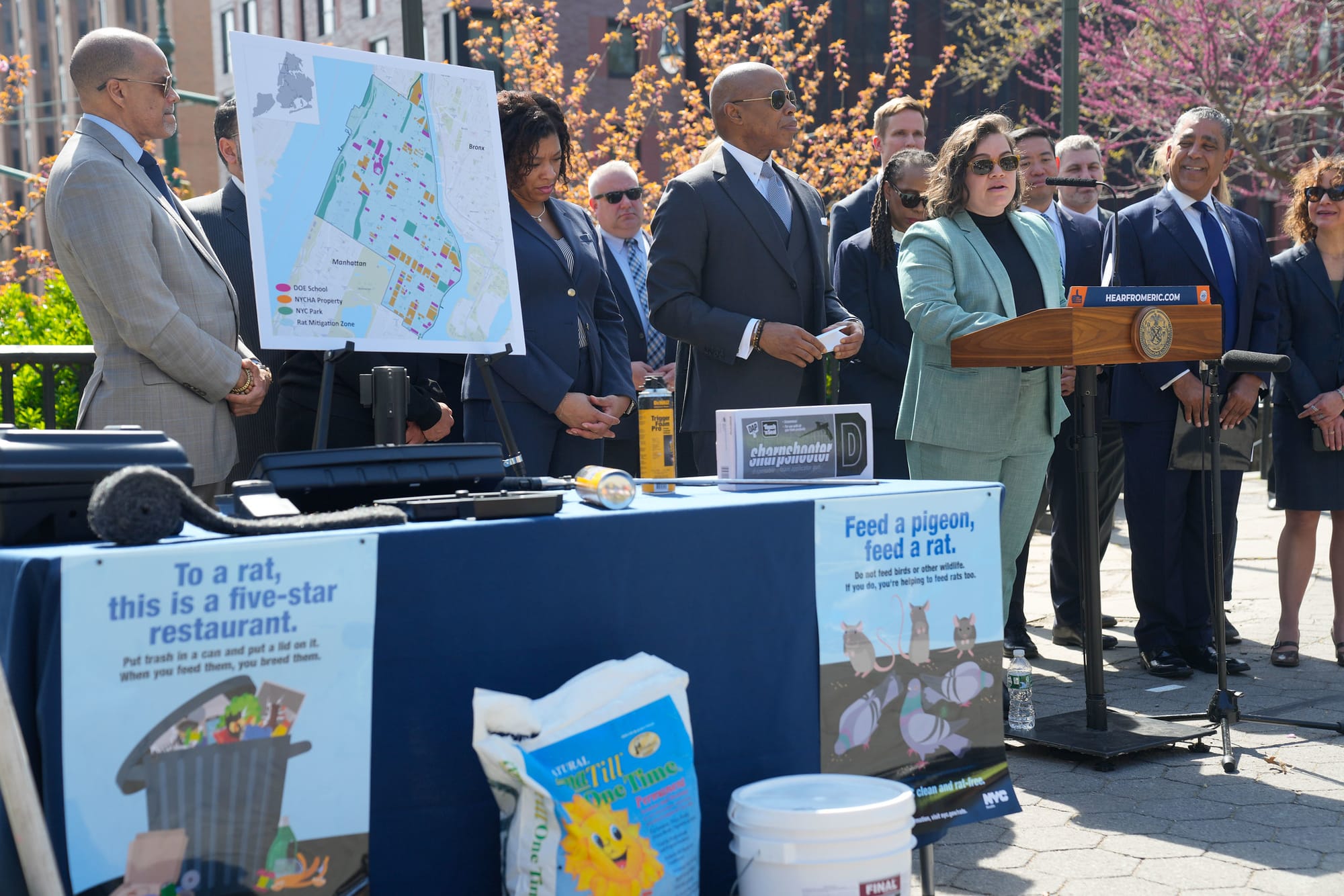
It all got me thinking, if my hometown is so good at the whole rat eradication thing, what could New Yorkers learn from them? Could New York City create a rat-free zone in the city, a rat-free neighborhood, a rat-free borough? And if push came to shove, would New Yorkers even want to eradicate our rats? They are, after all, our unofficial mascot. And unlike isolated New Zealand or Hawaii, New York doesn't have as many delicate species that are threatened by them.
Subscribe to read the full story
Become a paid subscriber to Hell Gate to access all of our posts.
Subscribe