




New Yorkers can now see how the judges on the state's highest court decide on issues like tenant protections, immigrant rights, voting access, and policing through a new public information tool launched this week.
Our Court of Appeals judges dictate how the rest of the state's courts must rule. Now, with a few clicks, New Yorkers can compare, side-by-side, how each of the appeals court judges have voted when the court had a split decision.
The platform, called Decoded, is the newest project from Oded Oren, who in 2023 left his job as a public defender to start Scrutinize, a website dedicated to increasing judicial transparency. (Hell Gate used Scrutinize as a research tool for our project Courts of Contempt, a deep dive into how judges become judges in New York, and the consequences the broken system can have for everyday New Yorkers.)
Decoded uses AI to scrape and organize the judges' decisions, a platform Oren launched Wednesday after a year of intense development and trial and error. (It was worth it: Oren won a David Prize for his efforts.)
"If a New Yorker is interested in a specific judge, they can go to their profile page, and they can see their record on the issues that they care about: voting rights, healthcare, criminal justice, and so on," Oren explained.
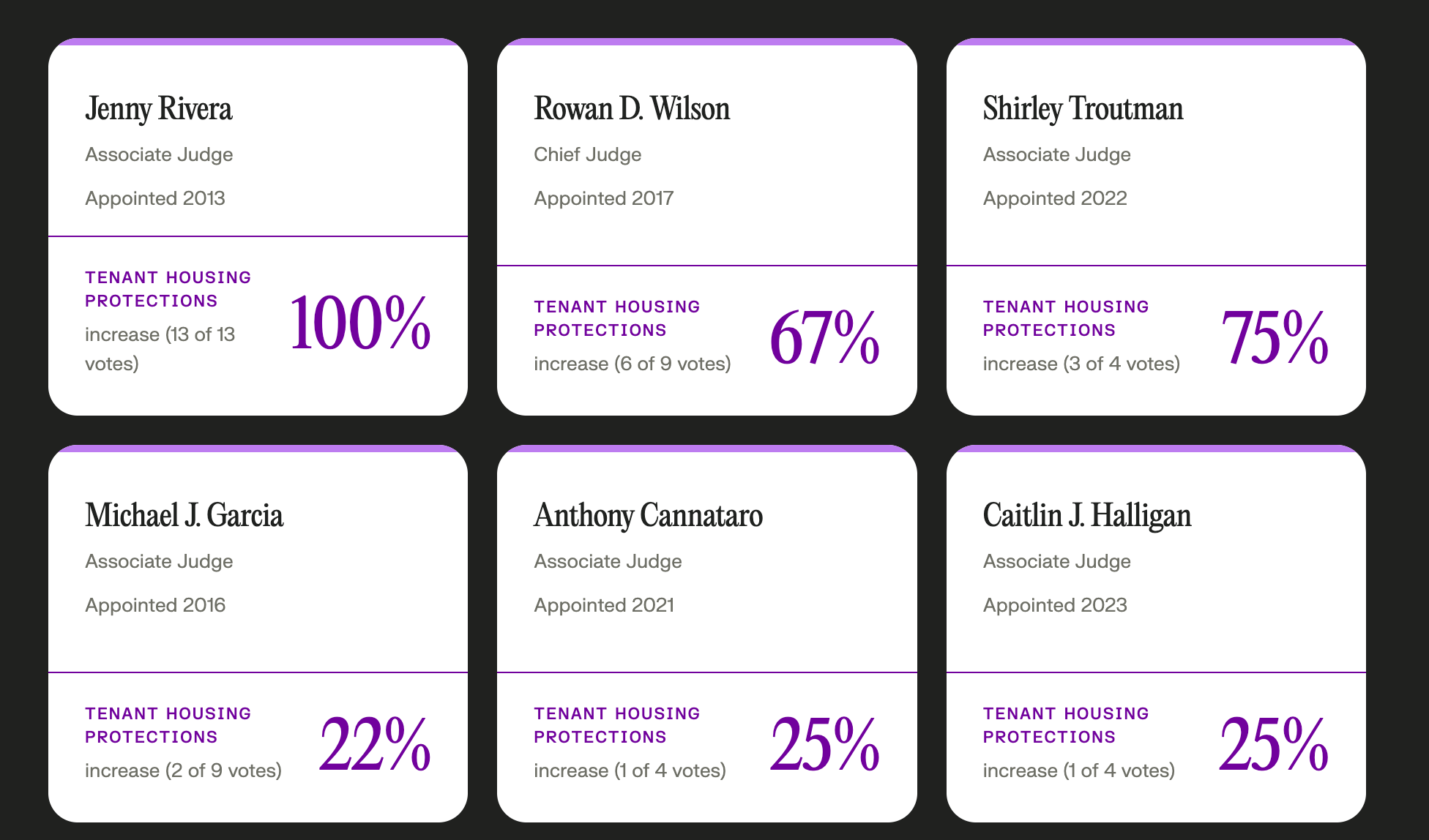
To launch the project, Oren used Court of Appeals Judge Jenny Rivera as an example—laying out her entire 13-year voting record on its website. It's a fascinating case study, because Judge Rivera's term ends in February 2027. By looking at her decision-making record, we can see what kind of judge we are set to lose from the bench, as the legislature, state government, and Governor Kathy Hochul begin to consider whether they will reappoint her or appoint someone new.
The record shows that Rivera—the judge who has been on the bench the longest—pulls the bench to the left in many categories. She's voted to increase noncitizen protections in 88 percent of cases—more than any other judge. She's voted 100 percent of the time to increase tenant protections, also more than any other judge. She's voted to increase due process protections almost 70 percent of time, the highest rate of any judge, and voted to increase criminal punishment in just 29 percent of cases—one of the lowest rates of the seven justices.
The Commission on Judicial Nomination is currently vetting those who have nominated themselves to take Judge Rivera's position, Oren said. Now, for the first time, the decision makers will have data at their fingertips about the bench they've already selected, and the type of judge they're looking at replacing.
Hell Gate caught up with Oren on Thursday to learn more about how Decoded changes the judicial appointment game, and how regular New Yorkers can use it—including to see which judges terms are up soon.
This interview has been lightly edited and condensed for clarity.