



Throughout the history of Andrew Lloyd Webber's megamusical "Cats," the character of Bustopher Jones has been played as a snooty, if unserious, white male fat-cat who represents the aristocracy (of cats). The song introducing Bustopher is about 45 percent the rest of the cast singing about how he's fancy, fat, and wears white spats; the other 55 percent is Bustopher himself singing about how he likes to go to the gentleman's club (safe for work) and eat various meals.
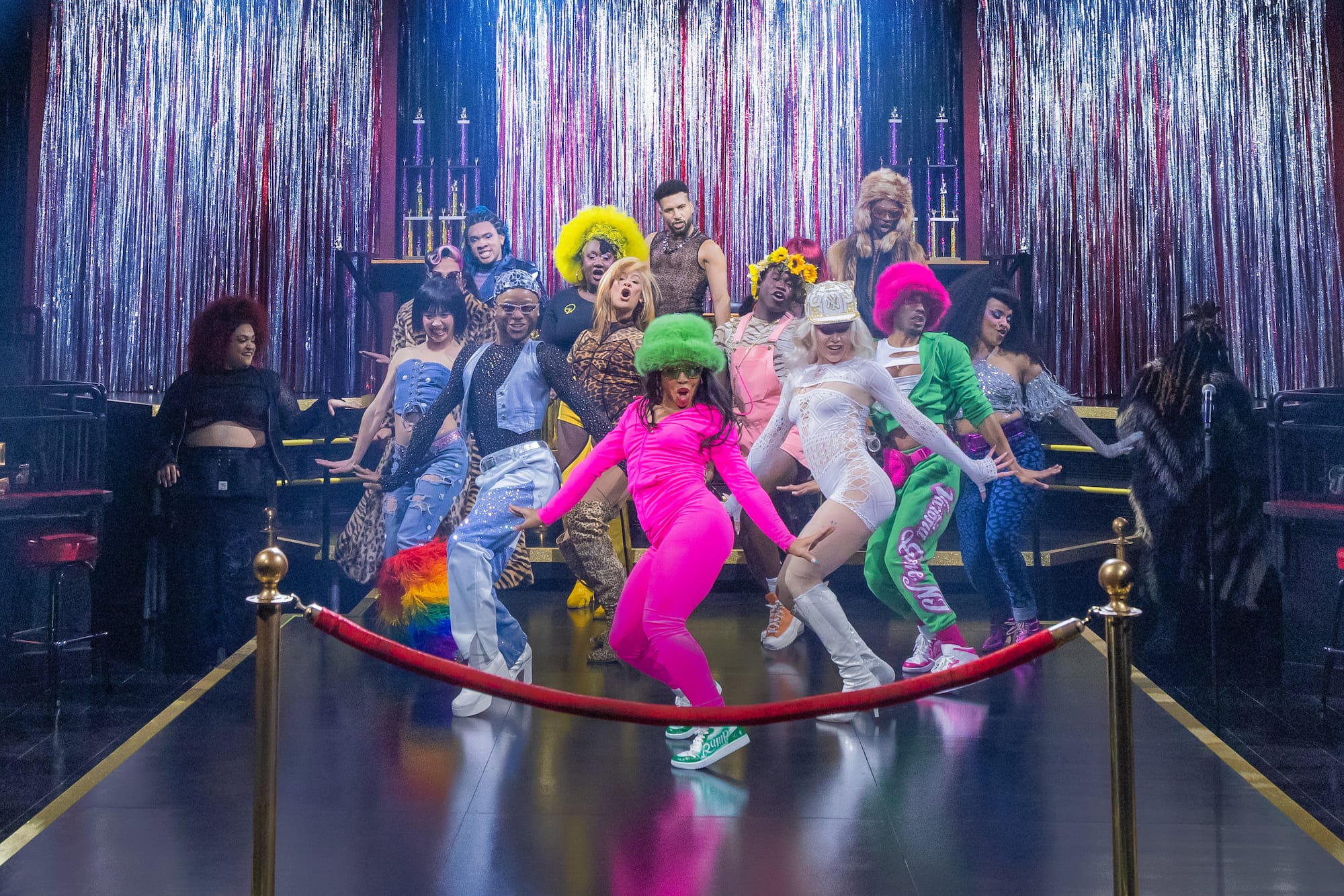
But the Bustopher Jones of "Cats: The Jellicle Ball," now playing on Broadway at the Broadhurst Theater, is far more interesting and complex than the original iteration—and not just because the character is unfurled in the middle of a vogue ball. This Bustopher is a confident, audacious, nonbinary Black person in a red-tailed tuxedo jacket and top hat—which are, as the ball's "Body" category unfolds, removed to reveal a glittering corset sequined with the Union Jack, a send-up of the Britishness of the original character. This Bustopher trills their Rs and stunts across the runway, fabulously, with none of the original's implied classist hierarchy. And while the Bustopher of "Cats" is often one of the first characters to be cut for time (and fatphobia), the Bustopher of "The Jellicle Ball" is a breakout superstar, eliciting loud whoops and elation from the audience both times I saw the beloved musical, both on Broadway and off. And all of that is because of Nora Schell, the power-voiced dynamo who busts down Bustopher with a powerful, mesmerizing aplomb.
"I wanted [Bustopher] to be kind of like, a drag-kid send-up of white male consumption," Schell told Hell Gate, "and then to flip it on its head where it's like, 'Yes, being fat is actually the least interesting thing about me.'" Schell originated the role off-Broadway, when "The Jellicle Ball" first ran at the Perelman Performing Arts Center in the summer and fall of 2024, and had originally auditioned for Demeter. The producers suggested Bustopher instead—they'd rewritten the role for a plus-sized, femme-presenting person—and by the time rehearsals started, the creative team had gotten permission from Andrew Lloyd Webber to change their song's pronouns from "he" to "them," to reflect that Schell is nonbinary. "Often, people will cast folks who exist in these identities and want to use them as a token, but not actually do the work," Schell said. "That is not our team, and I'm very thankful for that."
Subscribe to read the full story
Become a paid subscriber to Hell Gate to access all of our posts.
Subscribe